Understanding Errors and Omissions Insurance in Washington State: A Comprehensive Guide

Imagine navigating the labyrinth of professional liability without a safety net—scary, right? That’s where errors and omissions insurance, or E&O insurance, comes into play. In Washington State, this vital safety net is your shield against claims that could potentially jeopardize your business and reputation.
Errors and omissions insurance is not just another policy; it’s your armor against the unexpected. For professionals across Washington State, this insurance is crucial. Whether you’re a consultant, real estate agent, or tech guru, safeguarding your hard work from claims of negligence or inadequate work has never been more important. Let’s dive into why this insurance is a game-changer for professionals today.
Overview of Errors and Omissions Insurance in Washington State
Did you know that over 30% of small businesses face legal action every year? In Washington State, Errors and Omissions Insurance is your best defense against these costly claims. Let’s dive into why this insurance is crucial for professionals like you.
Errors and Omissions Insurance, often called E&O Insurance, is a must-have for any professional offering advice or services. It protects you from claims of negligence, mistakes, or failure to perform your professional duties. Whether you’re a consultant, real estate agent, or IT professional in Washington State, this coverage can save you from financial disaster.
The Importance of E&O Insurance for Your Profession
Imagine a scenario where a client claims your advice led to financial loss. Without E&O Insurance, you could be personally liable for thousands of dollars in legal fees and damages. No one wants to drain their savings on a lawsuit.
Here is the deal: E&O Insurance covers both legal defense costs and any settlements or judgments against you. This means you can focus on doing your job without worrying about potential litigation. It’s peace of mind, plain and simple.
How E&O Insurance Shields You from Negligence Claims
When you make a mistake, even an unintentional one, clients can sue. They may argue that your work was negligent or inadequate. This is where E&O Insurance comes in. It acts as a safety net, covering legal expenses and claims made against you.
Pro Tip: Always review your E&O policy details. Ensure it aligns with the specific risks of your industry and your professional activities.
In Washington State, having the right E&O Insurance is not just smart—it’s essential. Protect yourself and your business by understanding and investing in this vital coverage.
Key Features of Errors and Omissions Insurance Policies
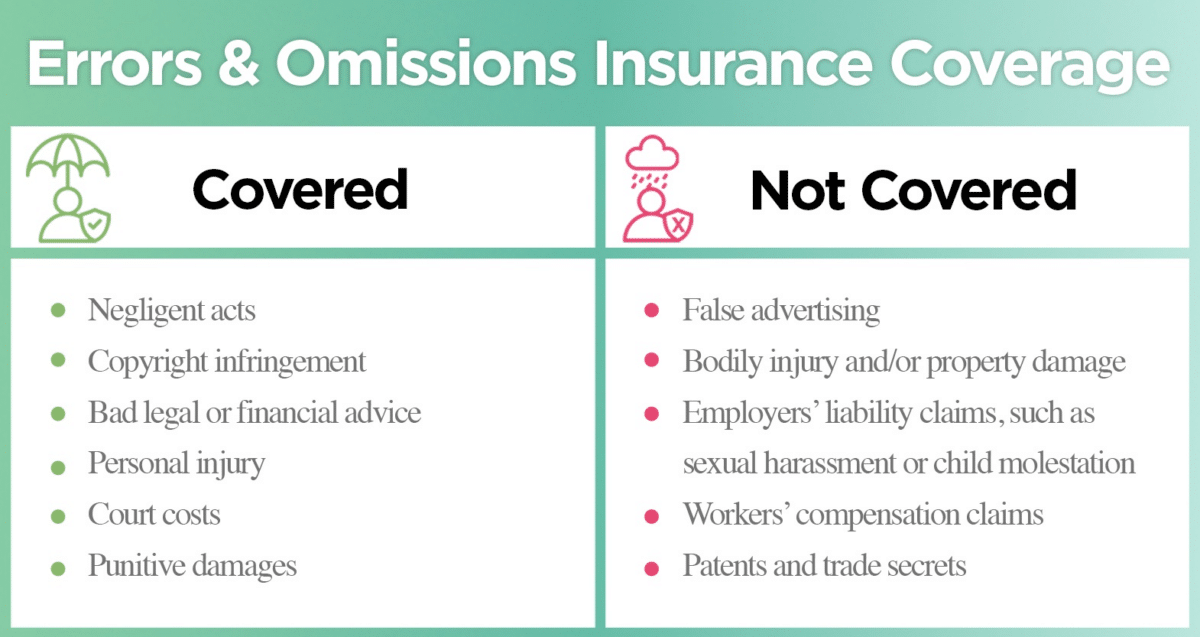
:max_bytes(150000):strip_icc()/EO-Final-35aff6b5f50644aabd242e60da643e80.jpg "insurance errors omission features liability definition claim")
Are you ready to discover what makes Errors and Omissions Insurance a must-have for professionals in Washington State? Here are the key features that can make or break your E&O policy.
Errors and Omissions Insurance, also known as professional liability insurance, is designed to protect you from claims of negligence or inadequate work. But not all policies are created equal. Understanding the common features can help you choose the best coverage for your needs.
Common Features of E&O Insurance Policies in Washington State
Most E&O insurance policies offer coverage for legal defense costs, settlements, and judgments. Some policies even cover temporary staff and independent contractors, which is crucial if you frequently outsource work. But here’s the deal: these policies come with specific limits, so you need to make sure they align with the risks you face in your profession.
Comparing Different Policies and Coverage Options
How do you choose between different E&O policies? The key is to compare their features and premiums. While some offer broader coverage, they often come with higher premiums.
| Company | Key Features | Premium Range (Annual) |
|---|---|---|
| PolicyOne | Legal defense costs, settlements, independent contractor coverage | $500 – $1,000 |
| InsureCorp | Temporary staff coverage, claims investigation | $750 – $1,500 |
| SecureShield | Broad coverage, low deductibles | $1,000 – $2,000 |
Pro Tip: Always review the exclusions in your E&O policy. These are the scenarios where you won’t be covered, and knowing them can prevent unexpected surprises.
Eligibility and Application Process
Did you know that many businesses in Washington State are exposed to costly professional liability claims? Without Errors and Omissions (E&O) Insurance, you could be leaving your business open to serious financial risk. Let’s dive into who qualifies and how you can apply.
Before you can get your hands on that crucial E&O insurance, you need to check if you’re eligible. In Washington State, eligibility largely depends on your business type, the services you offer, and your claims history. But here’s the deal: Even if you’ve faced claims in the past, you might still qualify with the right insurer.
Understanding Eligibility Criteria for E&O Insurance
To qualify for E&O insurance in Washington, you must operate in a professional service industry like consulting, real estate, or healthcare. The insurer will assess the nature of your services and your business’s risk profile. A clean claims history can significantly boost your eligibility, but if you’ve had claims before, don’t worry. Some providers offer tailored policies to those with previous issues.
Step-by-Step Application Process
Applying for E&O insurance might seem daunting, but it doesn’t have to be. Here’s a step-by-step guide to get you started:
- Gather your business documents, including any previous claims history.
- Contact multiple insurers to compare quotes and coverage options.
- Fill out the application form, providing detailed information about your services and risk assessments.
- Submit the required documentation, which may include financial statements and proof of professional licenses.
- Once reviewed, you’ll receive a policy offer. Review it thoroughly before acceptance.
Pro Tip: Always double-check the fine print to ensure you’re getting the best coverage for your specific business needs.
Application Procedures and Estimated Timescales
Here’s a quick overview of the application steps and how long each one might take:
| Procedure | Estimated Timescale |
|---|---|
| Gather Documentation | 1-2 Days |
| Contact Insurers | 3-5 Days |
| Complete Application | 1 Day |
| Documentation Review | 5-7 Days |
| Policy Offer and Acceptance | 2-3 Days |
Getting E&O insurance might take a bit of time, but it’s a vital step to protect your business from unforeseen liabilities. So, why wait?
Legal Requirements and Industry Standards
Did you know that in Washington State, certain professions are legally required to have Errors and Omissions (E&O) insurance? That’s right. Without it, you could be breaking the law and risking hefty fines.
Here’s the deal: Legal requirements for E&O insurance vary depending on the industry. For some professionals, it’s not just a smart business move—it’s mandatory. Understanding these requirements can save you from potential legal headaches.
Washington State E&O Insurance Legal Requirements
In Washington State, specific industries are under legal obligation to carry E&O insurance. This requirement ensures that professionals are protected from claims of negligence or inadequate work. For instance, real estate agents and brokers are required by law to maintain E&O coverage. Similarly, insurance agents must have a policy in place before they can legally operate.
Industry Standards and Compliance Considerations
While not all industries are legally bound to have E&O insurance, many have industry standards that suggest it. For example, IT consultants and financial advisors often find that having E&O insurance is a standard practice, even if not mandated by law. These standards are in place to ensure that clients feel secure in their dealings with professionals. BUT, it’s crucial to check the specific requirements for your industry to ensure compliance.
Pro Tip: Not having E&O insurance when it’s required can lead to losing your professional license.
Professions Where E&O Insurance Is Mandatory
Here’s a quick rundown of some fields where carrying E&O insurance isn’t just a good idea—it’s the law:
- Real Estate Agents and Brokers
- Insurance Agents
- Accountants
These professions need to comply with legal standards to continue their practice legally.
Cost Factors and Premium Calculation
Ever wondered why your Errors and Omissions insurance premium might differ from your neighbor’s? You’re not alone. Premiums can vary dramatically between industries and individual businesses.
The cost of E&O insurance in Washington state isn’t a flat rate. It’s influenced by multiple factors like the type of business, the potential risk, and your claims history. And guess what? Your business location can also play a role. The more risk your business carries, the higher the premium you’ll likely pay.
Factors That Affect Your E&O Premium
Here’s the deal: Industry type is a big factor. If you’re in a high-risk industry like finance, expect to pay more. Business size matters too. A larger company with more employees often pays a higher premium because the chances of a mistake increase. And don’t forget about your claims history. If you’ve made claims in the past, insurers might see you as a higher risk.
How Premiums Are Calculated for Different Professions
Step #1: Insurers will assess the specific risks associated with your profession. For example, a real estate agent might have different risks compared to a tech consultant. Step #2: They consider the coverage limits you choose. Higher limits mean higher premiums. It’s that simple.
Pro Tip: Want to lower your premium? Consider increasing your deductible. It’s a quick way to reduce costs.
Industry-Specific Cost Comparisons
Let’s look at some numbers. Below is a table comparing cost factors and premium examples for various industries in Washington state:
| Industry | Average Premium | Key Cost Factor |
|---|---|---|
| Real Estate | $600/year | Property Transaction Volume |
| Technology | $1,200/year | Project Complexity |
| Healthcare | $1,500/year | Medical Malpractice Risk |
| Finance | $2,000/year | Financial Advisory Risk |
Pretty eye-opening, right? Different industries face different risks, which translates to varied premium costs.
Claims Process and Handling Disputes
Did you know that nearly 40% of E&O insurance holders will file a claim at some point? This makes understanding the claims process crucial.
Filing a claim doesn’t have to feel like pulling teeth. When you know the steps, you’ll handle it like a pro. It all starts with gathering the right documents and notifying your insurer immediately.
Procedure for Filing a Claim
Step #1: Documentation is your best friend. Gather all contracts, communications, and evidence related to the alleged error or omission.
Step #2: Notify your insurer ASAP. The sooner you file, the smoother the process. Procrastination can lead to complications.
Step #3: Work with your claims adjuster. They’re not the enemy. Use their expertise to navigate the process efficiently.
Strategies for Handling Disputes and Claim Denials
But what happens if your claim gets denied? Here is the deal: don’t accept “no” for an answer right away. Start by requesting a detailed explanation from your insurer.
If you hit a wall, consider hiring a lawyer who specializes in insurance disputes. They can help interpret policy language and negotiate on your behalf.
Pro Tip: Always maintain a claims diary. Record every interaction with your insurer, including dates and times, to build a robust case if needed.
Patience and persistence are key. With the right approach, you can turn a denial into approval.
Example Scenario: Claim Process from Start to Resolution
Let’s say you’re a consultant and a client claims you provided faulty advice, resulting in financial loss. You immediately gather all your emails and project notes.
You notify your insurer, and they assign an adjuster to your case. After a few weeks of back-and-forth, the insurer offers a settlement.
The client initially refuses but eventually accepts after negotiations. Your E&O policy covers the settlement amount, and your reputation remains intact.
Last Word
In the ever-evolving landscape of professional services, safeguarding your reputation and livelihood with errors and omissions insurance is not just wise—it’s essential. As we’ve unraveled the complexities of E&O insurance in Washington State, it’s clear that having this safety net empowers professionals to work confidently, knowing they’re protected against unforeseen claims. So, take the step to secure your future, and let E&O insurance be your trusted ally in the unpredictable world of professional work.
Frequently Asked Questions
What is errors and omissions insurance?
Errors and omissions insurance is a type of professional liability insurance that protects businesses and professionals from claims of inadequate work or negligent actions.
Who needs errors and omissions insurance in Washington State?
Professionals such as consultants, real estate agents, and IT professionals, among others, should consider E&O insurance to protect against liability claims.
What does errors and omissions insurance cover?
This insurance covers legal costs, settlements, and judgments arising from claims of negligence, misrepresentation, or mistakes in the professional services provided.
How is the cost of errors and omissions insurance determined?
The cost is influenced by factors such as the type of profession, the size of the business, claim history, and coverage limits.
How do I file a claim under my errors and omissions insurance policy?
To file a claim, contact your insurance provider, submit the required documentation, and follow their procedures to ensure a smooth process.
Is errors and omissions insurance required by law in Washington State?
While not always legally required, many industries have standards and client contracts that mandate E&O insurance to protect against liability claims.